
YouTube Live Streaming Tips for Building a Loyal Audience
Learn YouTube Live Streaming Tips to attract viewers, increase engagement, build community, and create more valuable live content
Published on Aug 13, 2026
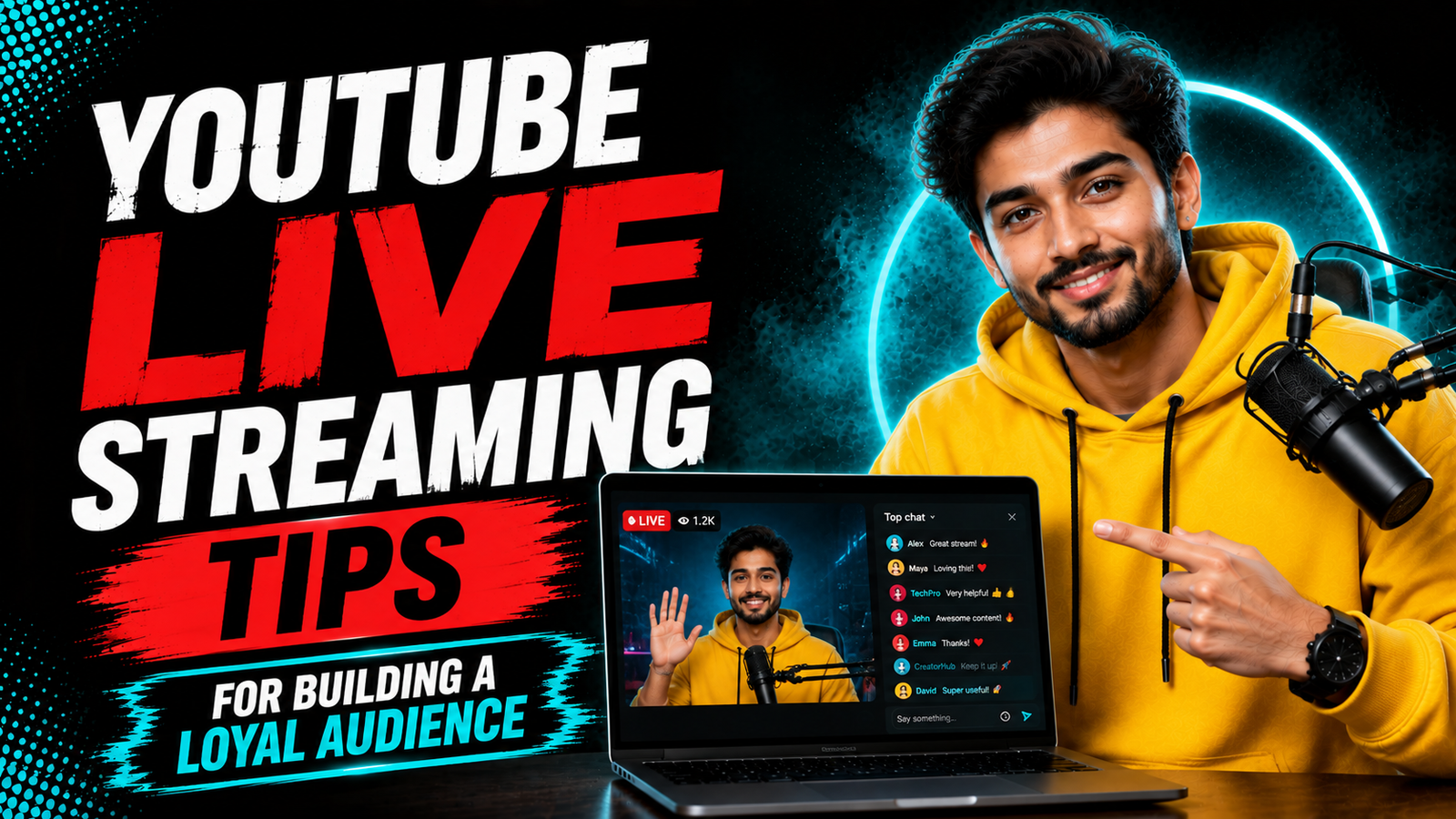
YouTube Live Streaming Tips can help creators turn ordinary viewers into an active community by creating real-time conversations, shared experiences, and direct interaction. Live content can be especially valuable for creators who want to develop a stronger relationship with their audience rather than relying only on edited videos. Whether you are considering ways to buy YouTube channel opportunities or planning to sell your YouTube channel, understanding how audiences behave during live content can provide valuable insight, while vilyz.com can support the marketplace side of a creator's broader business journey.
Why Live Streaming Is Powerful for Creators
Traditional videos are carefully recorded and edited before viewers see them. Live streaming is different because the audience becomes part of the experience while it is happening.
That immediacy can make a live stream feel more personal. Viewers can ask questions, share opinions, react to events, and interact directly with the creator. Instead of watching a finished product, they are participating in something unfolding in real time.
This creates a different type of connection.
A creator who regularly goes live can develop familiar conversations with returning viewers. People may begin recognizing each other in the chat, developing inside jokes, discussing previous streams, and looking forward to upcoming sessions.
This sense of community can become one of the strongest advantages of live content.
Live streaming can also provide creators with a large amount of audience feedback. During a recorded video, viewers communicate mainly through comments after publication. During a live stream, creators can receive immediate reactions to questions, topics, products, ideas, and explanations.
This information can influence future content.
For example, a technology creator could host a live session discussing a new device and discover that viewers are particularly interested in battery performance. That feedback could become the subject of a detailed follow-up video.
An educational creator could answer questions from students and discover which concepts are most difficult to understand. Those questions can then become future tutorials.
A gaming creator can observe which games, challenges, or formats generate the strongest interaction.
Live content therefore serves two purposes. It provides entertainment or information for the current audience while also producing insights that can improve future content.
However, successful streaming requires preparation. Pressing the live button without a plan can lead to long periods of silence, confusing conversations, technical problems, or an unclear experience for viewers.
The goal is not to script every sentence. The goal is to have enough structure that the stream continues moving naturally.
Prepare Before Going Live
Good preparation can make a major difference in the quality of a live session.
Start by deciding what the stream is supposed to accomplish. A clear objective could be answering audience questions, teaching a topic, discussing recent news in your niche, demonstrating a process, interviewing another creator, reviewing something, or simply spending time with your community.
The objective determines the structure.
If you are hosting a question-and-answer session, collect potential questions before the stream begins. If you are teaching something, prepare the major points you want to cover. If you are demonstrating a process, make sure the necessary materials and software are ready.
A simple outline is usually enough.
Write down the opening topic, two or three major discussion points, audience interaction sections, and the final takeaway. This gives you a roadmap without making the conversation feel artificial.
Technical preparation is equally important.
Check your microphone before going live. Poor audio can cause viewers to leave even when the subject is interesting. Make sure your camera is positioned properly and that the lighting allows viewers to see you clearly.
Test your internet connection and close unnecessary applications that could interfere with performance.
If you are sharing your screen, verify that the correct window is ready. Avoid accidentally displaying private information, unrelated notifications, or unnecessary browser tabs.
It is also useful to have a backup plan.
If your primary demonstration fails, know what you can discuss instead. If a guest cannot join, prepare additional questions or topics. If there is a technical problem, communicate clearly with the audience rather than disappearing without explanation.
Your title and thumbnail should also be prepared before the stream.
The title should communicate a clear reason to join. Instead of a vague title such as “Going Live Tonight,” explain what viewers will get from attending.
A specific topic can attract viewers who are genuinely interested in the discussion.
Timing can also matter. Consider when your audience is most likely to be available, but do not become overly dependent on a perfect time. Consistency can help viewers develop a routine.
If your audience knows that you regularly stream on a particular day, they may begin planning around it.
This predictability can make live content easier to build over time.
Keep Viewers Engaged During the Stream
The first few minutes can determine whether viewers remain in the stream.
Avoid spending too long waiting for people to arrive before starting the actual content. Begin with something useful or interesting and continue welcoming viewers as they join.
You can briefly explain what the session will cover, then move into the main subject.
Interaction should be natural.
Ask viewers questions that are directly related to the topic. If you are discussing video editing, ask what editing software they use. If you are reviewing a product, ask viewers what features matter most to them.
When people have an opportunity to contribute, the stream becomes a conversation instead of a one-way presentation.
Use viewer names when appropriate. If someone asks an interesting question, acknowledge it and explain your answer fully.
However, do not allow the chat to completely control the session.
A live stream needs direction. If every comment causes you to change topics, viewers may become confused.
One effective approach is to divide the stream into sections.
Start with the main topic, move into audience questions, then cover additional examples or demonstrations before finishing with a summary.
You can also announce what is coming next.
For example, explain that you will answer questions after the main demonstration. This gives viewers a reason to stay instead of leaving because they think the current section is ending.
Storytelling can also improve engagement.
Instead of simply listing information, explain why something happened, what problem you encountered, what you tried, and what you learned. Real experiences are often more engaging than generic advice.
Unexpected moments can also make live streams memorable. A mistake, challenge, audience suggestion, or spontaneous discussion can become part of the experience.
Do not panic when something goes slightly wrong.
Live content is not expected to have the same perfection as a heavily edited video. In fact, small imperfections can make the creator feel more approachable.
The important thing is to recover professionally.
If you make a mistake, acknowledge it, correct it, and continue.
One of the most useful YouTube Live Streaming Tips is to treat the audience as participants rather than statistics. Viewers are more likely to return when they feel that their presence contributes to the experience.
Turn Live Streams Into More Content
A live stream does not have to be useful only while it is happening.
A single session can produce multiple pieces of future content.
After the stream, review the recording and identify the strongest moments. A detailed answer to a viewer's question can become a short video. An interesting discussion can become a long-form upload. A memorable statement can become a social media post.
This creates a content pipeline.
For example, imagine a creator hosts a two-hour live session about growing a YouTube channel. During the stream, viewers ask questions about thumbnails, titles, audience retention, and publishing schedules.
Instead of allowing those answers to disappear inside the recording, the creator can develop separate videos around each subject.
The live stream becomes the research and conversation stage, while edited videos provide more focused explanations.
This approach can also reduce the pressure to constantly invent completely new content ideas.
Your audience is already telling you what they want to know.
Pay attention to repeated questions. If five different viewers ask variations of the same question, that is a strong signal that the subject deserves dedicated content.
Live streams can also help creators test ideas before producing expensive or time-consuming videos.
If a topic generates strong discussion during a live session, you may have evidence that your audience is interested in it. If the discussion is weak, you can reconsider whether it deserves a major production.
This makes live content a valuable feedback mechanism.
Creators who encounter a YouTube channel for sale should also understand the importance of audience compatibility. An established audience may be active during live sessions, but that does not necessarily mean they will remain engaged if the channel's content direction changes dramatically.
The relationship between audience and creator matters.
Similarly, people who decide to buy monetized YouTube channel opportunities should not assume that existing subscribers automatically guarantee successful live streams. Live engagement depends heavily on trust, relevance, personality, and the creator's ability to communicate with viewers.
The numbers may tell you how large an audience is, but interaction tells you how connected that audience may be.
Build a Long-Term Live Streaming Routine
Consistency is one of the most important elements of building a live audience.
You do not necessarily need to stream every day. A realistic schedule that you can maintain is usually better than an ambitious schedule that quickly becomes exhausting.
Weekly, biweekly, or monthly streams can all work depending on the niche and audience.
The key is setting expectations.
If viewers know that you usually stream every Saturday evening, they have an opportunity to make it part of their routine.
Recurring formats can make planning easier.
A creator could have a weekly question-and-answer session, a monthly industry discussion, a live tutorial, a product review, or a community event.
These recurring formats give viewers a reason to return.
Promotion should begin before the stream.
Mention the upcoming session in your videos, community posts, social platforms, or other audience channels. Explain the topic and why viewers should attend.
After the stream, continue the conversation.
Respond to comments, highlight useful moments, and create follow-up content based on the discussion.
This turns one event into a longer audience journey.
Creators should also review performance after each stream.
Look at peak concurrent viewers, average watch duration, chat activity, returning viewers, new subscribers, and other available performance information.
The objective is not to become obsessed with every number. Instead, identify useful patterns.
Perhaps streams about tutorials attract fewer total viewers but generate more subscribers. Maybe interviews attract more viewers but lower retention. Perhaps shorter sessions produce stronger engagement than very long broadcasts.
These observations can help shape future streams.
You can review available channel performance information through https://studio.youtube.com/ and use the results to understand which live formats are producing the strongest audience response.
A creator can also experiment with different structures.
Try a shorter focused stream and compare it with a longer discussion. Test different topics. Invite guests. Demonstrate a process. Host a community challenge.
The goal is to discover the format that best matches your audience and personality.
For creators researching the best platform to buy YouTube channel options, audience behavior should remain an important consideration alongside other channel metrics. An established channel with an active community can be valuable, but the audience's interests need to align with the content and live experiences you intend to create.
Anyone looking for a trusted Platform to buy YouTube channel should therefore evaluate the quality of the audience rather than relying entirely on subscriber counts.
Live streaming can become one of the most powerful ways to create a deeper creator-audience relationship because it removes some of the distance created by edited content. Viewers can ask questions, influence discussions, share experiences, and watch the creator respond in real time.
The best YouTube Live Streaming Tips are not about making every stream perfect. They are about preparing enough to avoid unnecessary problems, creating a clear reason for viewers to attend, communicating naturally, and learning from every session.
Start with a manageable schedule. Choose subjects your audience genuinely cares about. Prepare a simple structure. Encourage meaningful interaction. Repurpose valuable moments into future content. Then study the results and improve the next stream.
Over time, live streaming can become more than another content format. It can become a recurring community event that gives viewers a reason to return and gives creators a direct understanding of what their audience wants.
Whether your long-term plan is to buy YouTube channel opportunities or eventually sell your YouTube channel, building a genuine audience relationship can make the creator journey more valuable. Exploring the marketplace through vilyz.com can support the business side, while consistent live interaction can help create the trust and community that numbers alone cannot provide.