
YouTube Partner Program Update 2027: New Monetization Rules for Creators
YouTube Partner Program Update 2027 changes Shorts, YPP eligibility, Premium revenue, and new creator earning opportunities
Published on Aug 22, 2026
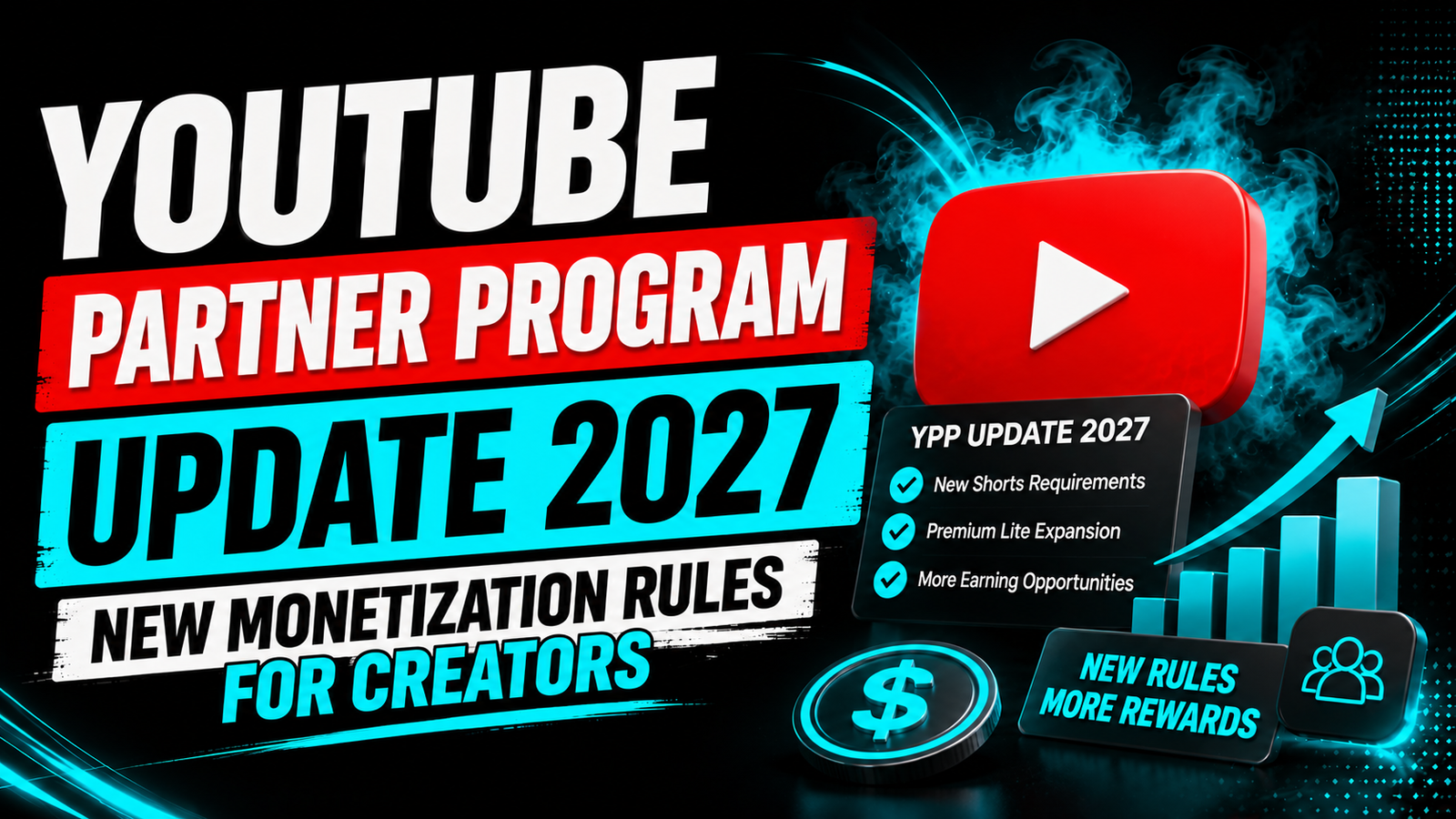
YouTube Partner Program Update is becoming one of the biggest topics for creators planning their YouTube business strategy for 2027. YouTube has announced major changes to how creators can qualify for and earn from the Partner Program, including new Shorts requirements, Premium revenue opportunities, and additional incentives for active creators. For people exploring the creator economy, a buy YouTube channel can provide access to an existing audience, while creators considering whether to sell your YouTube channel need to understand how future monetization rules can influence channel value. The wider creator marketplace, including vilyz.com, is also becoming increasingly relevant as YouTube channels develop into serious digital businesses.
What YouTube Is Changing in 2027
YouTube announced on August 10, 2026, that it is making significant changes to the YouTube Partner Program for 2027. The company says the changes are designed to reward active creators and expand opportunities beyond traditional advertising revenue. YouTube currently has more than 3 million creators participating in the Partner Program.
The changes are scheduled to take effect on February 1, 2027, giving creators several months to understand the new requirements and prepare their strategies.
One of the most important changes concerns Shorts revenue sharing. Starting February 1, 2027, creators who want to qualify for ads and subscription revenue sharing on Shorts will need 10 million qualified Shorts views during the previous 90 days. Channels that fall below that threshold will remain in the Partner Program and can continue earning through long-form content, while Shorts revenue sharing can resume after the required threshold is reached again.
This distinction is important because being part of the Partner Program and qualifying for every specific revenue stream are not necessarily the same thing.
A creator could remain within the broader Partner Program while not meeting the new Shorts revenue-sharing requirement. That means creators should understand exactly which monetization feature they are targeting instead of treating YPP as a single all-or-nothing system.
YouTube has also announced changes to the requirements for new creators seeking ads and Premium revenue sharing. New applicants will need either 8,000 qualified watch hours during the previous 365 days or 20 million qualified Shorts views during the previous 90 days under the announced 2027 rules. YouTube says these changes will not affect creators who are already in the Partner Program.
The higher thresholds demonstrate how competitive the creator economy has become. At the same time, YouTube says it expects to pay creators more overall in 2027 than it did in 2026.
Why Shorts Creators Need a New Strategy
Shorts have become one of YouTube's largest discovery engines. YouTube says the platform now receives more than 200 billion daily Shorts views, making short-form content an enormous opportunity for creators.
However, the new rules mean that creators should think about Shorts differently.
A strategy based entirely on producing large quantities of short videos may not be enough. Creators need to build audiences that actually return, interact, and continue watching their content.
The 10-million-view threshold is particularly significant for creators who depend heavily on Shorts revenue. Reaching that number within 90 days requires consistent performance rather than one successful upload.
For example, a creator might produce 100 Shorts in three months but receive very low engagement on most of them. Another creator might produce fewer videos but repeatedly create content that attracts large, relevant audiences. The second strategy can potentially be more sustainable because it focuses on content quality and audience loyalty rather than volume alone.
Creators should also consider the relationship between Shorts and long-form videos. A Short can introduce someone to a channel, while a longer video can provide more detailed information and build a deeper relationship.
This creates an opportunity to use different formats for different stages of the viewer journey.
A Short might answer one quick question. A longer video can explore the complete subject. A live stream can allow direct interaction. Community posts can keep viewers engaged between uploads.
This type of ecosystem can reduce dependence on a single format.
YouTube is also expanding tools that allow creators to participate in trends and remix content. Its AI-powered Reimagine feature allows eligible Shorts to be transformed into new short clips, while the platform has continued developing AI-assisted creation tools.
Technology can make production faster, but creators should still focus on originality. As AI-assisted production becomes easier, repetitive content can become more common. YouTube has also been emphasizing efforts to address low-quality, repetitive AI-generated content.
That makes personal perspective increasingly valuable.
A creator who uses AI to improve research, editing, captions, visual development, or brainstorming can save time while keeping human creativity at the center of the content.
New Ways Creators Can Earn
The most interesting part of the YouTube Partner Program changes is that YouTube is not simply raising requirements. It is also introducing additional ways for creators to earn.
YouTube has announced new incentive programs for creators who are below the 10-million qualified Shorts-view threshold. These programs are expected to include bonuses related to YouTube Shopping, incentives connected with brand deals, and earnings boosts for creators who start and grow trends. More details are expected from YouTube as the programs develop.
This represents a broader shift in the creator economy.
Advertising is still important, but creators increasingly have opportunities to build multiple revenue streams around their audience. Shopping, memberships, sponsorships, digital products, services, affiliate relationships, and other commercial activities can all become part of a creator business depending on the channel and its audience.
YouTube is also expanding Premium Lite. Under the announced changes, Premium Lite will expand to all countries where YouTube Premium is offered. YouTube says creators will receive revenue from Premium Lite subscriptions through a dedicated revenue pool, with distribution based on member watch time and views.
For creators, this means audience behavior can matter in more ways than simply generating advertising impressions.
A viewer who watches content through a subscription service can contribute to creator revenue through a different mechanism. This makes watch time and audience loyalty increasingly valuable.
It also means that creators should think about the quality of their audience rather than only its size.
A smaller audience that watches consistently can be commercially meaningful. A huge audience that watches one viral video and never returns may be less useful for building a sustainable business.
This is especially important for people evaluating a YouTube channel for sale. Subscriber numbers and public views can provide useful context, but they should not be treated as the entire value of a channel.
Historical performance, audience consistency, content quality, niche stability, monetization history, traffic sources, and engagement can all provide additional context.
Someone considering a buy monetized YouTube channel should therefore examine how the channel generates its audience and whether that audience is likely to remain interested in the content after ownership changes.
The phrase monetized YouTube channel for sale can sound attractive, but monetization itself does not guarantee future income. Revenue can change because of audience behavior, advertiser demand, content performance, seasonality, and platform rules.
What Creators Should Do Before February 2027
The best response to the YouTube Partner Program Update is preparation rather than panic.
Creators should first understand where their current revenue comes from. If most income comes from Shorts advertising, the upcoming threshold deserves immediate attention. If revenue comes primarily from long-form content, sponsorships, memberships, or other sources, the effect may be different.
The next step is to examine the channel's performance trends.
Look at the last 90 days rather than focusing only on lifetime statistics. For Shorts creators, this period is particularly important because the announced Shorts revenue-sharing requirement is based on qualified views during a rolling 90-day window.
Creators should identify which topics consistently perform well and which formats generate returning viewers.
A useful strategy is to create content clusters rather than unrelated uploads. If one subject attracts a strong audience, create several connected videos around it. This can help viewers discover more content and gives the creator multiple opportunities to learn from the same audience.
Creators should also pay attention to audience retention.
A video with a large number of views can still be weak if viewers leave immediately. A video with fewer views but excellent retention may provide a stronger foundation for future growth.
The same principle applies to Shorts. The goal should not simply be to make people stop scrolling. The content should give them a reason to watch, remember the creator, and return.
YouTube's analytics tools can help creators identify these patterns. The platform has also been adding AI-assisted tools to help creators understand and manage their channels. YouTube Studio remains the central place where creators can review performance and manage important channel activities.
Another important preparation step is diversifying revenue.
Creators who depend entirely on one monetization method may face greater risk when platform rules change. A diversified creator business can combine advertising with sponsorships, products, memberships, shopping, services, or other suitable income sources.
This does not mean every creator needs every revenue stream. The right combination depends on the audience and niche.
For example, a tutorial channel might earn through advertising, software affiliates, sponsorships, and digital courses. A lifestyle creator might combine advertising, brand partnerships, memberships, and shopping. A business educator might build revenue through sponsorships, consulting, digital products, and long-form content.
The important point is to create a business model that matches the audience.
For someone searching for the best platform to buy YouTube channel, the upcoming rules make due diligence even more important. Buyers should understand whether a channel's historical income depends heavily on a particular format or monetization source.
Someone searching for a trusted Platform to buy YouTube channel should also be cautious about guarantees. No historical revenue figure can guarantee future performance, particularly when platform rules are changing.
Existing creators may also want to review their options if they are considering whether to sell your YouTube channel. A clear record of channel performance, revenue sources, audience characteristics, and content history can help potential buyers understand the business more accurately.
The Bigger Picture for YouTube Creators
The YouTube Partner Program Update is more than a change to one monetization threshold. It reflects a broader evolution in the creator economy.
YouTube is increasingly treating creators as businesses that can generate value through multiple forms of audience interaction. Advertising remains important, but the platform is also investing in shopping, brand partnerships, subscriptions, AI-powered tools, and other creator opportunities.
This creates both pressure and opportunity.
The pressure comes from higher thresholds and stronger competition. The opportunity comes from having more ways to build a business around an engaged audience.
Creators should therefore avoid building their entire strategy around chasing a single viral number.
A better long-term approach is to build a recognizable brand, develop a clear niche, understand the audience, create consistently useful content, and develop multiple ways for viewers to engage.
The future of YouTube may also become increasingly shaped by AI-powered discovery. YouTube has introduced Ask YouTube, a conversational search experience designed to help viewers ask more complex questions and receive relevant videos from across the platform.
This could change how creators approach search optimization.
Instead of creating videos only around short keyword phrases, creators should think about the questions their audiences actually ask. Content that provides a complete, useful answer can become more valuable as discovery systems become better at understanding context.
Thumbnail strategy is evolving too. YouTube recently introduced custom thumbnail support for Shorts for eligible Partner Program creators and added thumbnail-generation capabilities to Ask Studio for long-form videos.
Together, these developments suggest that creators will have more control over how their content is produced, packaged, discovered, and monetized.
But more tools also mean more competition.
The creators who stand out will not necessarily be those with the most technology. They will be those who use technology to strengthen original ideas, better storytelling, useful information, and genuine audience relationships.
For anyone planning their 2027 strategy, the most important action is to understand the difference between platform access and sustainable creator income. Being eligible for a particular monetization feature is useful, but building an audience that repeatedly chooses your content is the foundation of long-term success.
Creators can review their current performance, revenue sources, and audience behavior through YouTube Studio, then use that information to decide where to invest their effort before the new rules take effect.
The creator economy is becoming more sophisticated, and YouTube's latest changes demonstrate that monetization is moving toward rewarding active participation, audience engagement, and broader creator-business activity. Creators who prepare early can use the remaining time to strengthen their content systems, diversify revenue, and build a more resilient audience.
For creators considering a buy YouTube channel opportunity or preparing to sell your YouTube channel, understanding the new rules is equally important because monetization history and audience quality can influence how a channel is evaluated. As these changes reshape the creator economy, vilyz.com can be part of the wider ecosystem for people treating YouTube channels as serious digital assets and long-term businesses.
The biggest lesson is straightforward: do not build your entire YouTube business around one monetization feature. Build an audience, create valuable content, understand your analytics, diversify your income, and stay prepared for platform changes. The creators who adapt early will be in a stronger position when the new rules arrive on February 1, 2027.