
YouTube Podcast Growth: How to Build an Engaged Audience
Learn YouTube Podcast Growth strategies to attract loyal viewers, improve discoverability, increase engagement, and build a successful podcast channel
Published on Aug 14, 2026
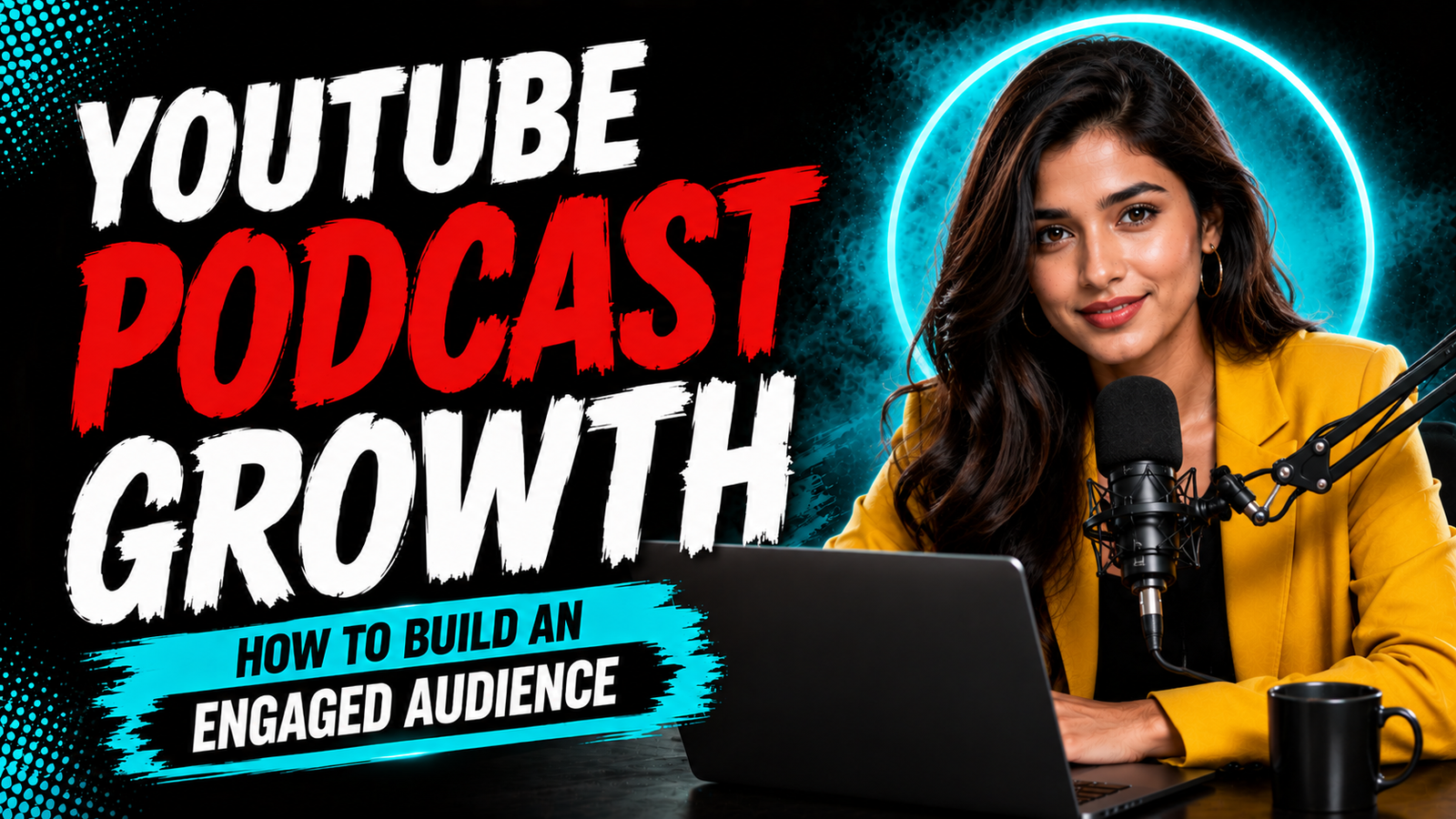
YouTube Podcast Growth is becoming an important opportunity for creators who want to build deeper relationships with audiences through long-form conversations, interviews, storytelling, and educational discussions. Whether your goal is to buy YouTube channel opportunities or eventually sell your YouTube channel, understanding how audiences discover and consume podcast content can help you make better decisions. The creator marketplace at vilyz.com can support the business side of a channel, but long-term success still depends on creating conversations that people genuinely want to watch.
Why Podcasts Are Growing on YouTube
Podcasting has traditionally been associated with audio platforms, but YouTube has transformed the format by making video an important part of the listening experience. Viewers can listen while working, studying, exercising, commuting, or relaxing, while the visual component gives creators another way to build a recognizable connection with their audience.
Video podcasts can also reach people who would never actively search for a podcast. A compelling interview, controversial discussion, educational explanation, or surprising conversation can appear through recommendations and attract viewers who are unfamiliar with the show.
This creates a major opportunity for creators.
A podcast channel does not necessarily need expensive production equipment to begin. Clear audio, good lighting, a suitable recording environment, and engaging conversations can provide a strong foundation.
The subject is often more important than production complexity.
A podcast about a clearly defined topic can attract a more relevant audience than a show that attempts to discuss everything. Technology, business, education, entertainment, personal development, history, sports, finance, and creator-related subjects can all support podcast formats when there is a consistent audience interest.
The strongest podcasts usually have a clear reason for existing.
Perhaps the host explains difficult subjects in simple language. Perhaps the show interviews experts who rarely receive long-form attention. Maybe the host provides practical advice based on personal experience.
That purpose becomes part of the show's identity.
Another advantage of podcasting is depth. Short-form videos are excellent for quick information and discovery, but longer conversations allow creators to explore complicated subjects.
A guest can explain their background, discuss failures, describe lessons learned, and provide detailed examples. These moments can create a stronger emotional connection than a short edited clip.
However, long-form content also creates a challenge: keeping viewers interested.
A two-hour recording does not automatically become a successful podcast episode simply because it contains valuable information. Structure, pacing, questions, storytelling, and editing all influence whether viewers remain engaged.
Choose a Strong Podcast Concept
The foundation of a successful podcast is a clear concept.
Before recording, decide who the show is for and what viewers should expect from every episode.
A broad concept such as “talking about interesting things” may provide unlimited freedom, but it gives viewers little reason to subscribe. A more specific promise makes the channel easier to understand.
For example, instead of a general business podcast, you could focus on startup failures, practical entrepreneurship for beginners, interviews with small-business owners, or detailed discussions about digital businesses.
Specificity can make discovery easier because viewers immediately understand what they are getting.
The host also matters.
A podcast is not simply a collection of topics. People often return because they enjoy the host's personality, communication style, opinions, humor, expertise, or interviewing ability.
This means creators should not attempt to sound exactly like established podcasters.
Develop your own conversational style.
If you are interviewing guests, research them carefully before each episode. Knowing their background allows you to ask more interesting questions than generic prompts.
Instead of asking, “How did you become successful?” ask about a specific decision, failure, turning point, or unusual experience.
Specific questions usually produce more useful answers.
Follow-up questions are equally important.
When a guest says something interesting, do not immediately move to the next prepared question. Explore the statement. Ask why it happened, what the person learned, what they would do differently, or how others can apply the lesson.
This makes the conversation feel natural rather than rehearsed.
A strong podcast concept should also have enough potential for many episodes.
Before launching, create a list of possible subjects and guests. If you can easily identify dozens of relevant episodes, the concept may have enough depth for long-term development.
If you struggle to find even ten ideas, the niche may be too narrow or the concept may need refinement.
Creators evaluating a YouTube channel for sale should consider this same principle. An established audience is useful only when there is enough relevant content to continue serving that audience.
Make Every Episode Worth Watching
A podcast episode should provide a reason for the viewer to stay.
The opening is particularly important.
Avoid spending several minutes discussing technical preparation, waiting for guests, or repeating information that viewers already know.
Begin with the most compelling part of the conversation.
You can introduce the guest briefly and immediately explain why the discussion matters. Another approach is to preview an interesting statement from later in the episode before starting the full conversation.
This creates curiosity without misleading the audience.
Episode titles should also focus on the strongest idea rather than simply listing the guest's name.
A title such as “Episode 24 With John Smith” gives viewers almost no reason to click. A title focused on a surprising insight, useful lesson, major question, or compelling story provides much more context.
Thumbnails should follow the same principle.
Use a clear subject, strong visual hierarchy, readable text, and an image that communicates the central idea. Avoid filling the thumbnail with too many words or unrelated graphics.
The guest's face can be useful, particularly when the guest is recognizable, but the thumbnail should still communicate why the conversation matters.
Audio quality deserves special attention.
Viewers may tolerate simple video production, but poor audio can make a long conversation difficult to follow. Use a suitable microphone, control background noise, and check recording levels before beginning.
Editing does not mean removing every natural pause.
Some pauses and reactions make conversations feel authentic. However, unnecessary silence, repeated statements, technical interruptions, and sections that add no value can make a long episode feel much longer than it actually is.
Chapters can also improve the viewing experience.
If an episode covers multiple subjects, organize them so viewers can easily find the sections that interest them. This can increase the usefulness of long-form content and make viewers more comfortable choosing longer episodes.
Another powerful strategy is creating shorter clips from full episodes.
A single podcast can contain several valuable moments. A strong argument, surprising story, useful lesson, emotional moment, or funny exchange can become a separate piece of content.
These clips can introduce new viewers to the full show.
Build Discoverability and Community
Publishing good episodes is only part of the process. Viewers need to discover them.
Search-friendly topics can help people find episodes when they are actively looking for information. Recommendation-focused packaging can help the podcast appear beside related content.
Research the questions people are asking within your niche and develop episodes around those questions.
For example, a business podcast could create an episode explaining why certain startups fail. A history podcast could explore why a major event happened. A technology podcast could investigate how a new technology works.
The topic should provide a clear reason for someone to watch.
Consistency also matters.
You do not necessarily need to publish every day. A realistic weekly or biweekly schedule can be more sustainable. The important thing is creating an expectation that the audience can rely on.
Community interaction can make the show stronger.
Ask viewers which guests they want to see. Invite them to submit questions. Discuss interesting comments during future episodes. Create polls around upcoming topics.
When viewers see their contributions influencing the podcast, they have more reason to remain involved.
Guests can also introduce the podcast to new audiences. When appropriate, encourage guests to share episodes with their communities.
However, guest selection should focus on relevance rather than follower count alone.
A guest with a smaller but highly relevant audience may create more valuable engagement than a famous person whose audience has no connection to your subject.
Creators considering the decision to buy monetized YouTube channel opportunities should pay particular attention to audience relevance. A podcast requires an audience that is interested in the conversations being created, not simply a large subscriber number.
Similarly, anyone evaluating a monetized YouTube channel for sale should examine historical content, audience interests, traffic sources, and engagement patterns before assuming that an existing audience will automatically support a new podcast direction.
The relationship between content and audience is critical.
Turn One Podcast Into a Content Engine
One of the biggest advantages of podcasting is the amount of content that can come from a single recording.
A one-hour conversation can produce a full episode, several short clips, quote graphics, community posts, discussion topics, and follow-up videos.
This makes podcasting particularly useful for creators who want to maintain a consistent presence across multiple platforms.
Start by identifying the strongest moments in each episode.
A powerful statement can become a short clip. A detailed explanation can become a standalone educational video. A disagreement can become a discussion topic. A frequently asked question can become a future episode.
This approach allows creators to build a content library without recording completely new material for every upload.
Search performance can also reveal which podcast subjects deserve additional attention.
If an episode about a particular topic consistently attracts viewers, create related episodes. Explore different perspectives, interview specialists, answer common questions, and investigate related issues.
Do not simply repeat the same episode.
Instead, expand the topic into a broader content ecosystem.
You can also create recurring segments.
For example, a show could begin each episode with a quick industry update, move into the main interview, and finish with rapid-fire questions. Recurring segments give the audience familiar structures while still allowing each episode to feel different.
The podcast can also become a source of authority.
Over time, a well-produced show can build a library of conversations and explanations that demonstrate the host's knowledge and network.
This can create opportunities beyond YouTube, including partnerships, sponsorships, products, services, events, and collaborations.
However, monetization should not become the only objective.
A podcast that focuses entirely on selling can quickly lose the trust of its audience.
The content should remain valuable even when viewers are not purchasing anything.
The best platform to buy YouTube channel opportunities should therefore be evaluated according to the quality and relevance of the existing audience, not simply the number of subscribers or historical revenue.
Creators looking for a trusted Platform to buy YouTube channel should also consider whether the existing channel identity can support a podcast format without creating confusion for its audience.
For creators building organically, the same lesson applies: develop an identity that can support multiple types of content while remaining recognizable.
YouTube Podcast Growth becomes much more sustainable when every episode serves a larger purpose. A strong concept attracts the right audience, engaging conversations keep them watching, and clips and follow-up content help introduce the show to new viewers.
Creators can monitor performance through https://studio.youtube.com/ and examine which episodes attract viewers, which topics encourage longer viewing, and which content leads people toward other videos.
The most successful podcast channels are rarely built from one viral episode. They grow through repeated value, recognizable formats, strong conversations, and a community that feels connected to the show.
Whether your long-term goal is to buy YouTube channel opportunities or eventually sell your YouTube channel, building an audience that genuinely cares about your content can make the channel more valuable over time. Exploring the creator marketplace through vilyz.com can support the business side of that journey, while consistent conversations, useful episodes, and authentic community engagement can provide the foundation for lasting podcast success.